
Or: Let’s Redesign Regional Development for Equity, Ecology, and Long-term Fiscal Health
When I was ten years old (in the early 1980s), my home town of Tauranga had about 50,000 people living here. Through the 80s and 90s there was rapid growth and by the time I was 30 it had doubled to a population just over 100,000. In the following 20 years it gained another 50,000 residents and by 2040 is projected to have around 250,000 permanent residents.
I was going to say on my worst days, but if I’m honest, actually more often than not, the unmitigated sprawl of residential dwellings and industry connected by congested traffic and poor public transport system feels more like a cancer on the landscape than a thoughtfully planned modern city with well-connected satellite communities.
This week the three Western Bay of Plenty councils signed a ten year “Regional Deal” with central government, promising 15,000 ‘new’ jobs, 12,000 ‘greenfield’ homes and $21.6 billion in ‘economic growth’. It’s an ambitious vision – but without articulating some core values to protect community interests, Te Taiao and future generations, the ambition is recklessness and will repeat the problems that have plagued the region since I was a child.
The Western Bay of Plenty Deal will reshape the region for decades. Yet its governance framework measures success almost exclusively in economic metrics: jobs created, new houses consented and GDP contributed. It is silent on whether those jobs last longer than a few months or pay living wages, whether those homes are affordable and built to a decent standard with materials that don’t cost the Earth, whether the ecosystems that make way for more humans to occupy will survive the transformation, or whether future residents will inherit a bill they can’t afford to pay.
None of the worst features of this deal are inevitable. Elsewhere in the world – in Scotland, in progressive cities across Europe and North America, and in Indigenous-led development models – governments have proven that human habitation and sustainability are not mutually exclusive. They’ve designed regional development frameworks that support local economies while protecting biodiversity, building community wealth, and distributing costs fairly across generations. The Western Bay of Plenty has a six-month window to learn from these models before its Implementation Plan is finalised. We really need to use this time wisely and not let the frame be set by the usual suspects of property speculators, consulting firms and infrastructure contractors who are all looking to make a lot of fast money from this deal before moving on to their next victims.
The Scottish Lesson: Growth with Purpose
In February 2026 – just a few months before our Regional Deal was signed – Scotland’s Parliament passed a Community Wealth Building Act. The law does something radical: it mandates that local governments actively redirect wealth to stay within communities rather than being extracted by distant corporations and their shareholders.
How? By using economic levers that the Western Bay of Plenty Deal mentions but doesn’t prioritise:
Local government contracts must favour local suppliers. Schools and hospitals, which are massive purchasers, must buy from local businesses. This isn’t just a feel good contribution, it provides economic circularity and strengthens the local community. Preston, England, demonstrated the power of this approach.
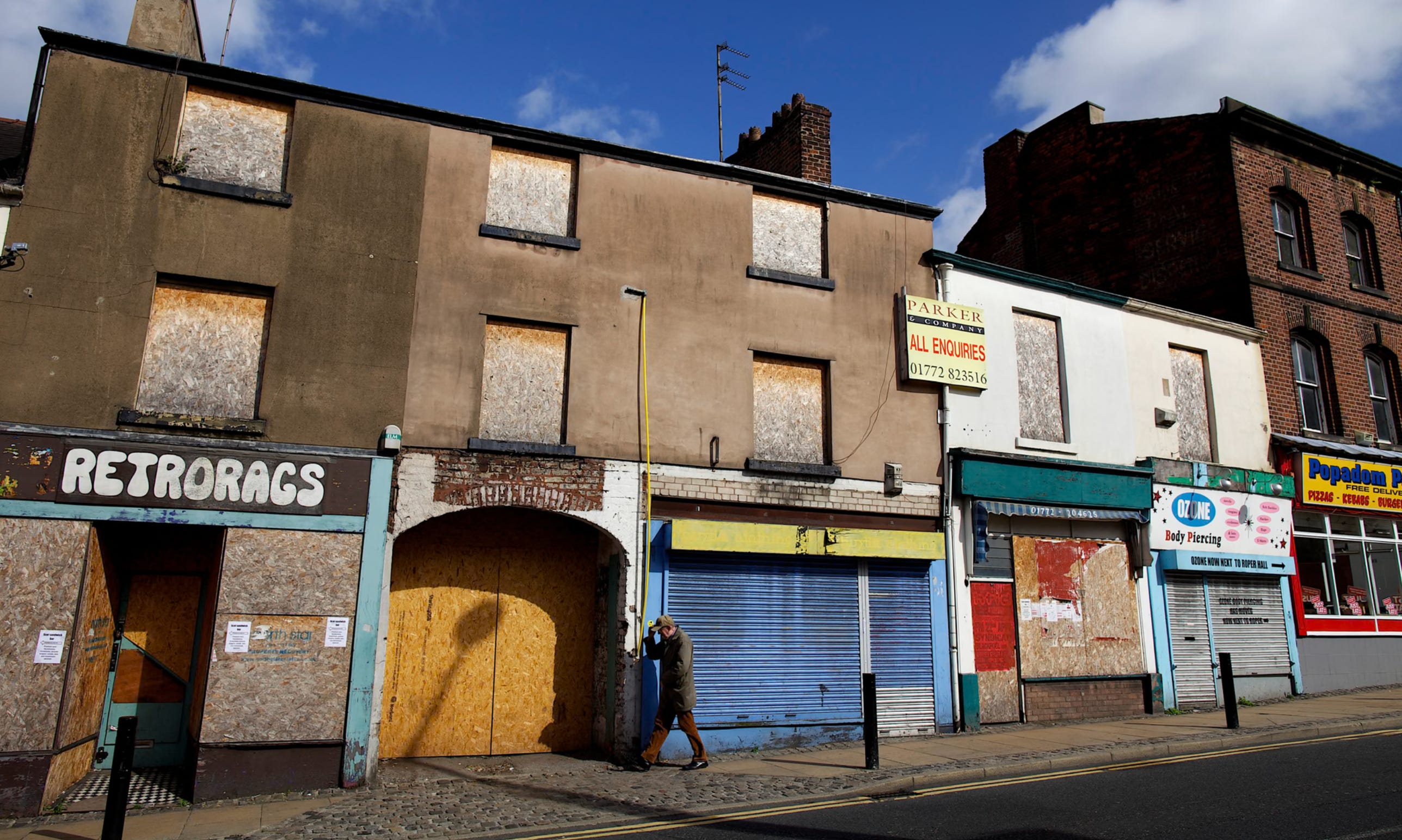
After the 2008 Global Financial Crisis hit their region hard, Preston was a post-industrial city where major institutions spent £750 million annually, but only 5% circulated locally. By shifting procurement to local suppliers and cooperatives, Preston returned £70 million to the community, generated 4,500 jobs, and a peer-reviewed study published in The Lancet found a 9% improvement in life satisfaction and a 2% decline in depression.
The new law in Scotland also mandates support for worker-owned cooperatives, community land trusts, and employee-owned businesses – structures that keep wealth local and give residents a stake in their communities’ futures.
The Western Bay of Plenty Deal mentions the “Māori economy” and “social procurement,” but these are aspirations, not mandates. There are no targets, no enforcement mechanisms, no requirement that any of the deal’s $21.6 billion in economic benefit actually stays in the region or reaches ordinary residents. Without real teeth, nice sounding words, fail miserably because they justify the sign-off but deliver peanuts to the stakeholders that should benefit.
The Intergenerational Debt Trap
The Western Bay of Plenty Deal commits to building water, wastewater, transport, and health infrastructure for a region expected to grow by 12,000 ‘greenfield’ homes. Nowhere does it acknowledge what that actually costs or who will pay.
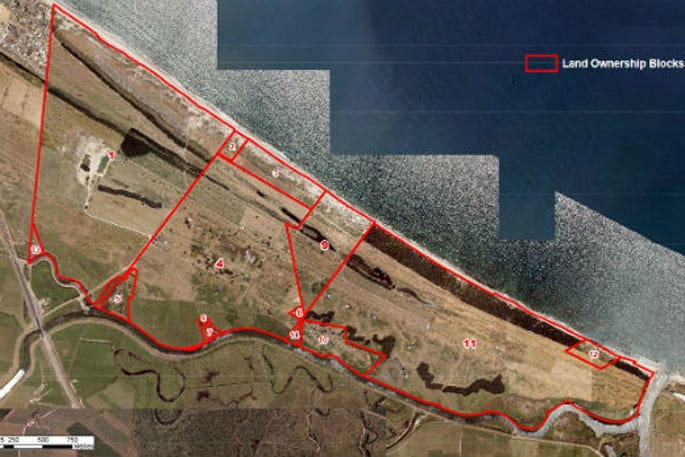
Infrastructure Funding and Financing Act (IFFA) levies will fund much of it – essentially, future developers and residents will pay. Private infrastructure investment models lock in long-term service contracts, often at escalating costs. The hospital redevelopment will unfold over 20 years “with Cabinet decisions for the design and enabling works to be taken in 2026. Funding for the project is dependent on successful budget bids.”
Translation: current beneficiaries (developers, landowners, employers) capture most of the gain. Future residents and ratepayers will carry the costs, making the place even less affordable.
By contrast, Singapore and Copenhagen have taken different approaches. Singapore’s Housing Development Board builds state-owned housing on a master-planned basis, keeping land and infrastructure costs low for residents. Copenhagen’s development model requires new neighbourhoods to be carbon-neutral or carbon-negative, with costs front-loaded into the development phase rather than pushed onto future residents through ongoing utility bills and climate adaptation costs.
The Western Bay of Plenty’s Implementation Plan should include a 50-year fiscal analysis: What is the per-capita infrastructure cost of greenfield sprawl versus intensification? Who bears that cost? What are the renewal and maintenance liabilities over 50 years? And critically: are costs and benefits being fairly distributed, or is the deal simply transferring public costs to future generations while private gains accrue to developers today?
The Biodiversity Blindspot
The deal’s target of 12,000 greenfield dwellings is presented as inevitable, not chosen. Yet the ecological cost is enormous and unacknowledged.
Greenfield expansion converts farmland, native bush, wetlands, and coastal ecosystems to urban use. The Eastern Corridor includes Papamoa East and Te Tumu – areas that contain ecological remnants. The Northern Corridor spans Omokoroa and Katikati. Nowhere does the deal require biodiversity net-gain, ecological offsets, or habitat restoration.
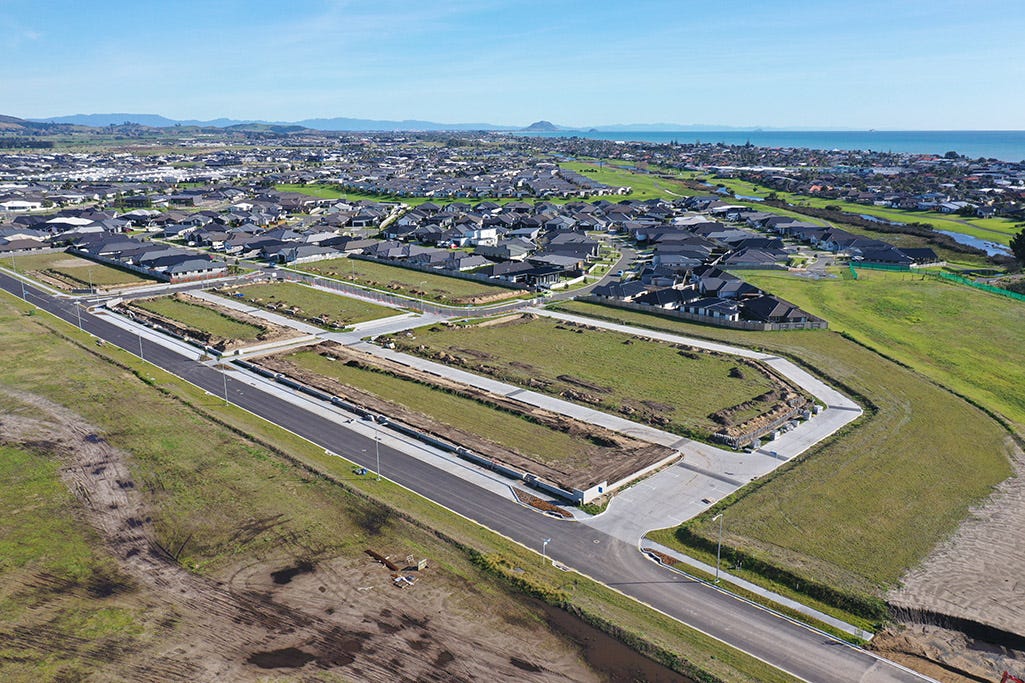
The EU’s approach, now being adopted in the UK, addresses these issues directly: the Nature Recovery Network mandate requires development to deliver measurable increases in biodiversity, not just offset losses. Developers must restore native habitat, create wildlife corridors, and contribute to landscape-scale ecological goals.
Costa Rica offers another model. Since 1987, it has required developers to contribute to a Conservation Fund, generating revenue for national parks and reserves while making development explicitly conditional on ecological outcomes. The result: despite GDP growth, forest cover increased from 21% in 1980 to over 50% today.
The Western Bay of Plenty deal should learn from examples like these and require:
- native habitat restoration targets aligned with development
- biodiversity net-gain standards (minimum 10-20% gain, not zero)
- ecological corridor protection across the three growth corridors
- wetland and coastal buffer setbacks tied to climate projections, not current sea levels
Without provisions like these, the deal will trade long-term ecological and climate resilience for short-term housing supply – a deal that will haunt the region for generations.
The Climate Trap: Growth Locked into Carbon
Greenfield sprawl is a climate suicide pact. The deal’s focus on distributed development across three corridors, combined with “local road improvements” and highway upgrades, is designed to enable car dependency. Yet it is silent on public transport, active travel, renewable energy, or carbon budgets.
The Western Bay has traffic congestion worse than Auckland, while building more and bigger roads creates induced congestion by further incentivising car use in a perverse cycle of inefficiencies instead of prioritsing cheaper and more convenient public transport.
The deal mentions “stormwater and flood management systems to ensure resilience,” buried under “other enablers of growth.” This is backwards too. Climate resilience should be a primary design principle, not an afterthought.
Melbourne and Toronto have shown that regional growth can be decoupled from sprawl. Melbourne’s Metropolitan Planning Strategyrequires 70% of new housing within existing urban areas, backed by mandatory minimum density standards and rapid transit investment. Toronto’s Greenbelt protects 600,000 hectares of farmland and ecosystem while accommodating growth within the urban boundary. A report released in March recognised the greenbelt providing food security, self-reliance and economic prosperity for the entire Ontario region in an uncertain global economy.
The Western Bay of Plenty should also learn from these kinds of examples and adopt:
- a regional carbon budget, with development carbon costs explicitly tracked
- public transit corridors as primary growth drivers, not highways
- mandatory renewable energy and EV charging standards for new development
- water conservation and recycling mandates, not just new supply
- green infrastructure standards: tree canopy, wetland buffers, permeable surfaces
Climate change will make the Bay of Plenty hotter and drier. Building 12,000 homes without addressing water security or heat resilience is negligent and immoral.
The Hollow Shell of Infrastructure Depreciation
As a former councillor, I know New Zealand councils have perfected the art of looking responsible while spending recklessly. They charge depreciation on infrastructure in their financial statements – the accounting equivalent of saying “we’re setting aside money for future renewal” – but the cash rarely materialises to be set aside.
A 2023 audit of local government found widespread underfunding of infrastructure renewal reserves, with councils charging depreciation they have no intention of actually saving to spend on infrastructure renewals. The mechanism is simple: depreciation appears as an expense in council accounts, but the money flows straight into general revenue and gets spent on immediate priorities – staff salaries, contracted services, events and otherwise unbudgeted major projects like a busy road ‘upgrade’. Ratepayers see a balanced budget and assume all infrastructure renewal is being funded.
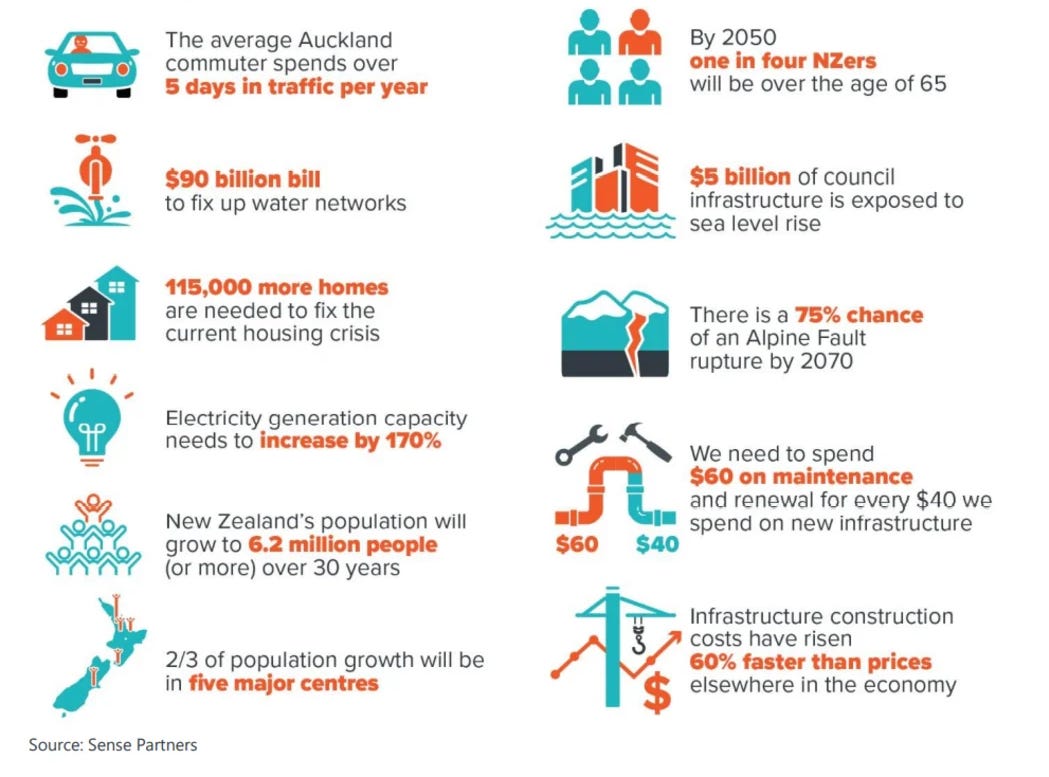
Councils face political pressure to spend money now rather than lock it away in invisible reserves. Audit committees sign off on balance sheets that show depreciation reserves that don’t actually exist in cash form. The result is a fiscal shell game: councils are simultaneously claiming to fund infrastructure renewal (in their accounts) and failing to fund it (in reality). This has created the $40+ billion underfunded infrastructure liability across New Zealand – a bill that will eventually come due, but only when it becomes a crisis that can’t be ignored.
The Western Bay of Plenty Deal will dramatically accelerate this problem. Building 12,000 new homes, water systems, roads, and schools will add billions in depreciating assets to councils’ books. Unless the Implementation Plan mandates actual sinking funds – with money legally ring-fenced and unavailable for current spending – future generations will inherit the infrastructure and the debt, while current residents enjoy the growth.
The Governance Deficit
The deal’s Oversight Board will report quarterly on “GDP, population, spend metrics, tourism numbers, housing consents.” Nowhere will it report on biodiversity, carbon emissions, local wage levels, or affordability. The framework measures ‘growth’ but not wellbeing, economic inclusion, or ecological health.
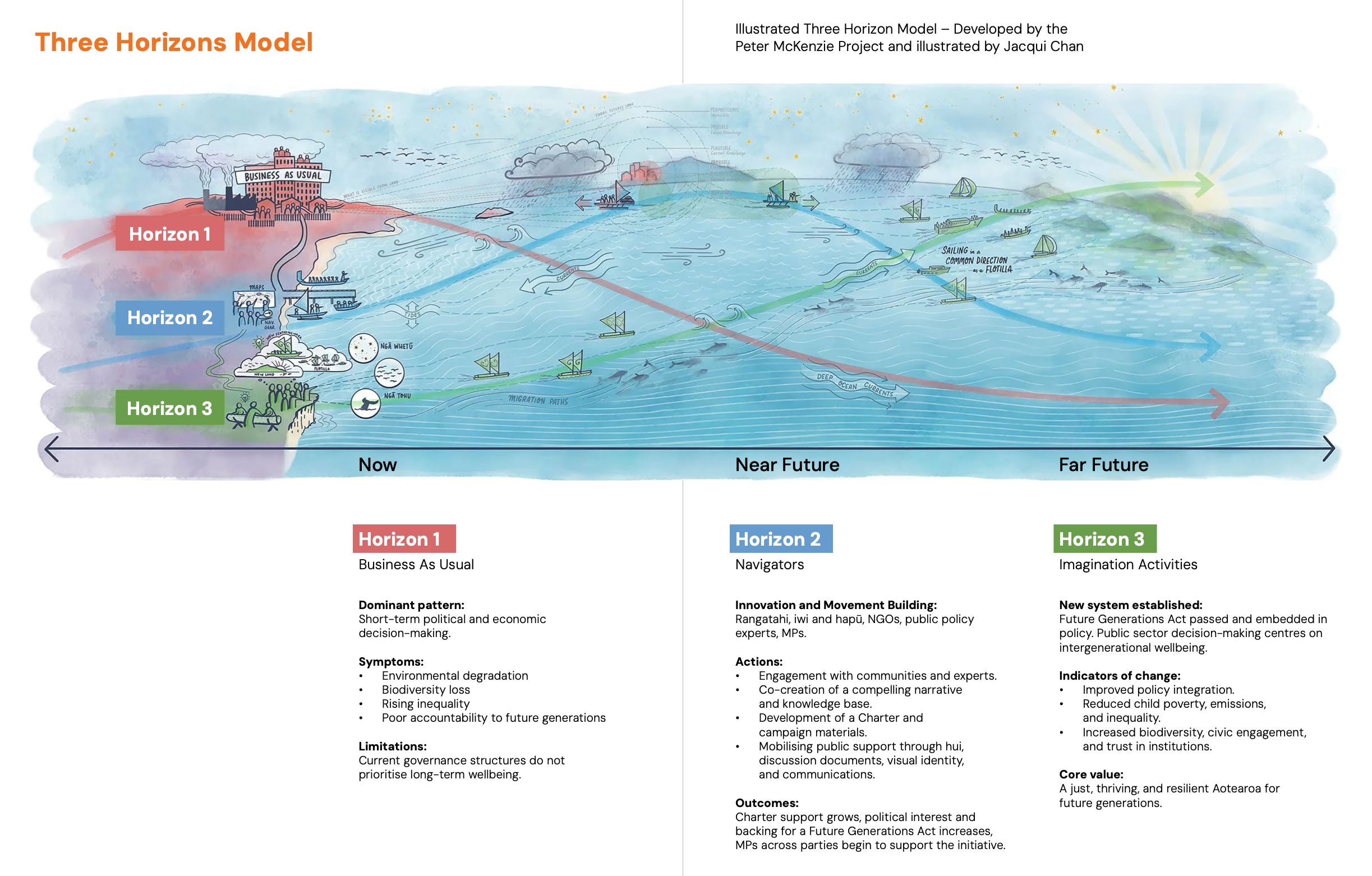
The Wellbeing Economy Alliance, which influenced Scotland’s approach and presented, through the NZ chapter, at an event in Tauranga last year supported by Tauranga City Council, recommends that regional development be measured against:
- environmental health (biodiversity, emissions, water quality)
- social equity (affordable housing, wage distribution, local business ownership)
- community resilience (skill levels, health outcomes, social cohesion)
- fiscal sustainability (long-term infrastructure costs, intergenerational fairness)
New Zealand’s own wellbeing framework, still embedded in the Public Finance Act, but planned for removal by the current Administration, requires government agencies to consider these dimensions. The Western Bay of Plenty Deal largely ignores them, which again is short-sighted and plain stupid.
What Needs to Change
In summary, sensible residents of the Western Bay of Plenty, council officials and our elected leaders should require that the Implementation Plan, due around the time of the General Election, includes key features like:
- Environmental limits: Net biodiversity gain, carbon budgets, water conservation targets, coastal adaptation standards.
- Social equity: Affordable housing percentages (30-40%), local business procurement targets (20%+), wage distribution metrics and Māori economic participation targets.
- Fiscal sustainability: at least 50-year lifecycle cost analysis, intergenerational cost allocation, sinking funds for infrastructure renewal.
- Governance accountability: Quarterly reporting on environmental, social, and fiscal metrics alongside economic metrics. The Oversight Board should include independent environmental and community representatives.
- Urban form constraints: Maximum sprawl footprint, minimum density standards in intensification zones, caps on car-dependent development.
The Regional Deal is not yet locked in, the governance framework is still being designed. The councils still have leverage. They can demand that growth serve community values, not the other way around.
Scotland proved that growth and equity can be compatible. Costa Rica proved that growth and ecology can be compatible. Melbourne and Toronto proved that growth and climate action can be compatible.
The question is whether the Western Bay of Plenty councils will accept a deal that prioritises developer profits and short-term construction jobs over long-term community wellbeing. Or whether they’ll demand a framework that grows the economy for the community, not despite it.
The next six months will determine whether this deal becomes a model for sustainable regional development, or yet another cautionary tale of toxic growth without guardrails. The outcome depends on whether local leaders have the courage to say: we are happy for growth, but not at any cost.
Disclaimer: These are my own views, not necessarily those of any organisation, company or community group I’m part of or involved with!
This article was originally posted by Manu Caddie on Substack on 16 May 2026.


Leave a comment